
History of Chemistry and Alchemy
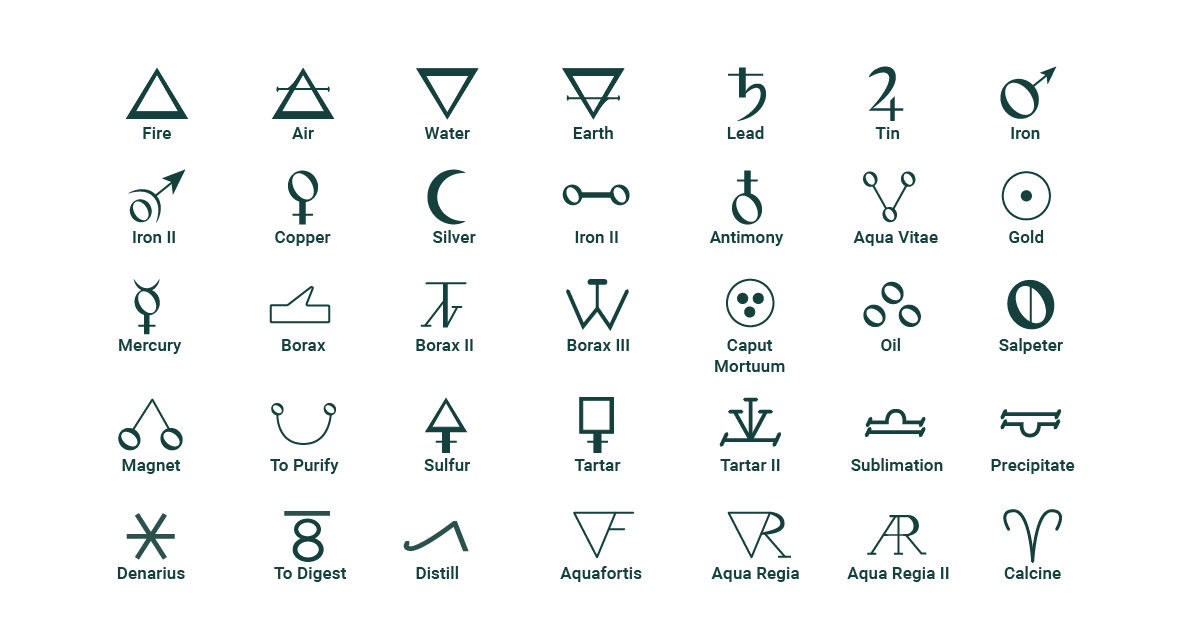
The Origins: Alchemy (Before Modern Chemistry)
What Was Alchemy?
Alchemy was an ancient philosophical and proto-scientific practice that aimed to:- Transform base metals (like lead) into noble metals (like gold)
- Create the Elixir of Life (for immortality or perfect health)
- Discover a universal solvent or philosopher's stone
It wasn't "chemistry" yet - more a spiritual and experimental art.
Ancient Civilizations
Alchemy's roots appear independently across several cultures:* Egypt (circa 300 BCE)
The word alchemy comes from Khemia - the "Black Land" (Egypt's name for itself).
Egyptian alchemists developed early techniques in metalworking, dyes, perfumes, and glassmaking.
The famous Hermes Trismegistus became a mythical figure associated with alchemical wisdom (Hermetic philosophy).
* Greece and Rome
Greek philosophers like Empedocles and Aristotle proposed that all matter was made of four elements:
🜂 Fire, 🜄 Water, 🜃 Air, and 🜁 Earth.
This idea deeply influenced alchemical theory for centuries.
* Arab-Islamic World (8th-13th centuries)
Islamic scholars preserved and expanded alchemical knowledge.
Notable figures:
* Jabir ibn Hayyan (Geber) - often called the father of early chemistry; introduced systematic experimentation.
* Al-Razi (Rhazes) — classified substances into "spirits," "metals," and "stones."
They developed laboratory apparatus like retorts, alembics, and distillation techniques still used today.
* Medieval Europe
Alchemy reached Europe through translations from Arabic and Greek texts.
Thinkers like Albertus Magnus and Roger Bacon combined Christian mysticism with chemical experiments.
The Philosopher's Stone became a symbol for spiritual perfection and transformation.
Transition to Modern Chemistry
The Scientific Revolution (1500s - 1600s)Alchemy gradually evolved into a more evidence-based science.
* Paracelsus (1493 - 1541) - used chemical substances in medicine, emphasizing practical alchemy over mystical goals.
* Robert Boyle (1627 - 1691) - wrote The Sceptical Chymist (1661), rejecting the four-element theory and proposing that matter consists of atoms and corpuscles.
This marks the birth of modern chemistry.
18th–19th Centuries: Chemistry Becomes a Science
* Antoine Lavoisier (1743–1794) - discovered the law of conservation of mass and helped define elements scientifically.* John Dalton (1803) - formulated the atomic theory, stating that each element is made of identical atoms.
* Dmitri Mendeleev (1869) - created the Periodic Table of Elements, organizing all known elements by atomic weight and properties.
Modern Chemistry (20th Century to Now)
Chemistry expanded into major branches:- Physical chemistry - studies energy and reactions
- Organic chemistry - focuses on carbon-based compounds
- Inorganic chemistry - explores non-carbon materials
- Biochemistry - studies chemical processes in living things
- Nuclear chemistry - investigates atomic nuclei and radioactivity